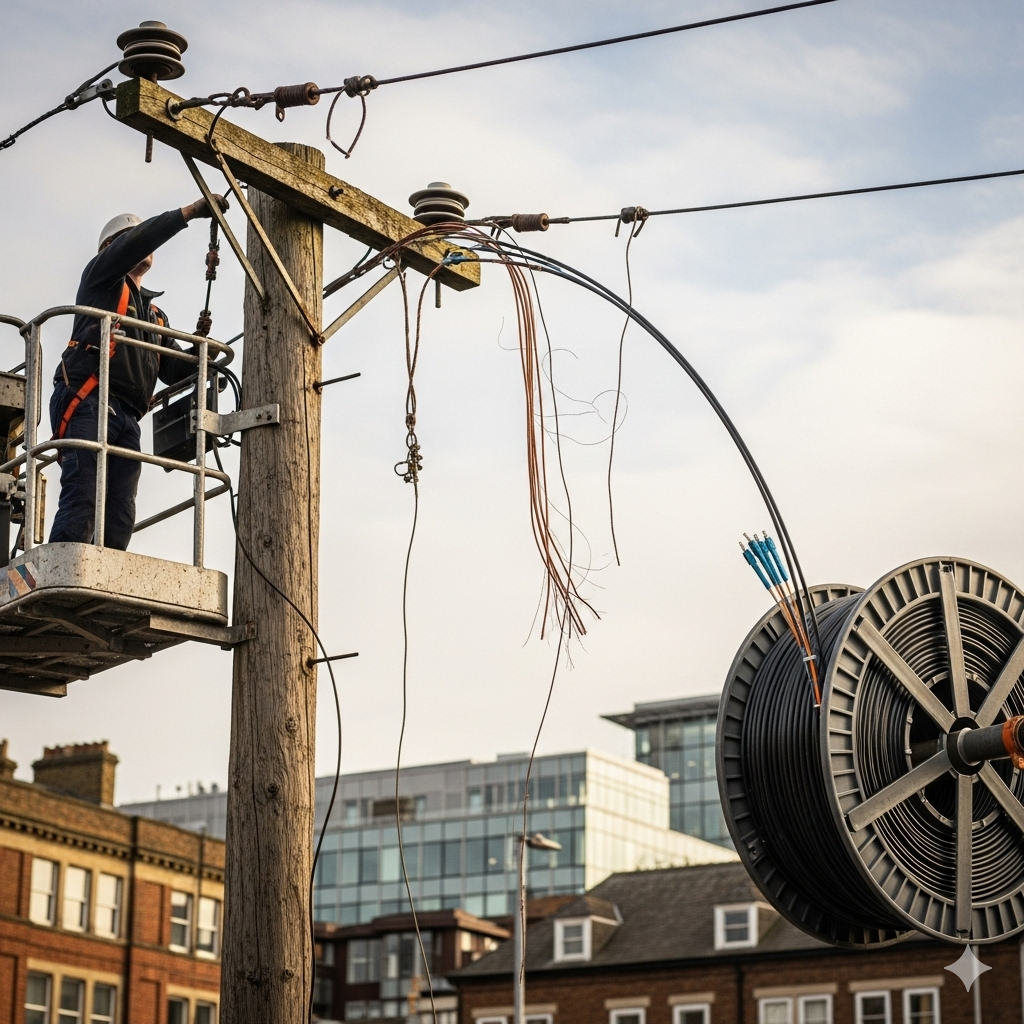
For decades, the familiar copper telephone line (Public Switched Telephone Network, or PSTN) has been a reliable fixture in our homes. But change is coming! Telecom providers across the [Your Country/Region] are gradually switching off the traditional PSTN, moving all voice calls onto digital, internet-based networks. This transition is expected to be completed by December 2025.
What is the PSTN Switch-Off?
Simply put, the old copper lines that carry traditional phone calls are being replaced by modern fibre broadband networks. This means your home phone will soon operate over your internet connection, similar to how services like Skype or WhatsApp calls work, but as a dedicated phone service.
Why is This Happening?
Outdated Technology: The PSTN is an aging system, expensive to maintain and less efficient than modern digital networks.
Better Quality & Features: Digital phone services (often called Voice over Internet Protocol or VoIP) offer clearer call quality and more advanced features like video calls, multiple lines, and integration with smart home systems.
Future-Proofing: Moving to digital aligns with the growth of fibre broadband and prepares our infrastructure for future technological advancements.
What Does This Mean for Your Home Phone?
If you currently have a traditional landline, you will need to switch to a digital phone service. Your existing phone number can usually be kept.
You'll Need Broadband: Digital phones require an active internet connection (broadband) to work. If you don't have broadband, now is the time to consider getting it.
New Equipment: Your existing corded or cordless phones might still work, but they'll connect to your broadband router via a special adapter or directly into a new "digital home phone" box provided by your broadband provider. You might also receive new digital handsets.
Power Cuts: Unlike old landlines that often worked during a power cut, digital phones rely on your router and electricity. Your provider might offer a battery backup unit for emergency calls, which is crucial to consider.
What You Need To Do:
Contact Your Provider: Reach out to your current landline and broadband provider. They will explain your options for migrating to a digital phone service.
Understand Your Options: Ask about new equipment, installation, costs, and importantly, solutions for making emergency calls during a power outage.
Check Other Services: If you have devices like personal alarms, medical alert systems, or even old alarm systems that rely on a traditional phone line, you MUST check with their providers to ensure they are compatible with digital phone services. These are critical and might need specific adjustments or replacements.
The PSTN switch-off is a significant change, but it's an opportunity for a more robust and feature-rich home communication experience. Don't wait until the last minute – start planning your switch to digital now!


